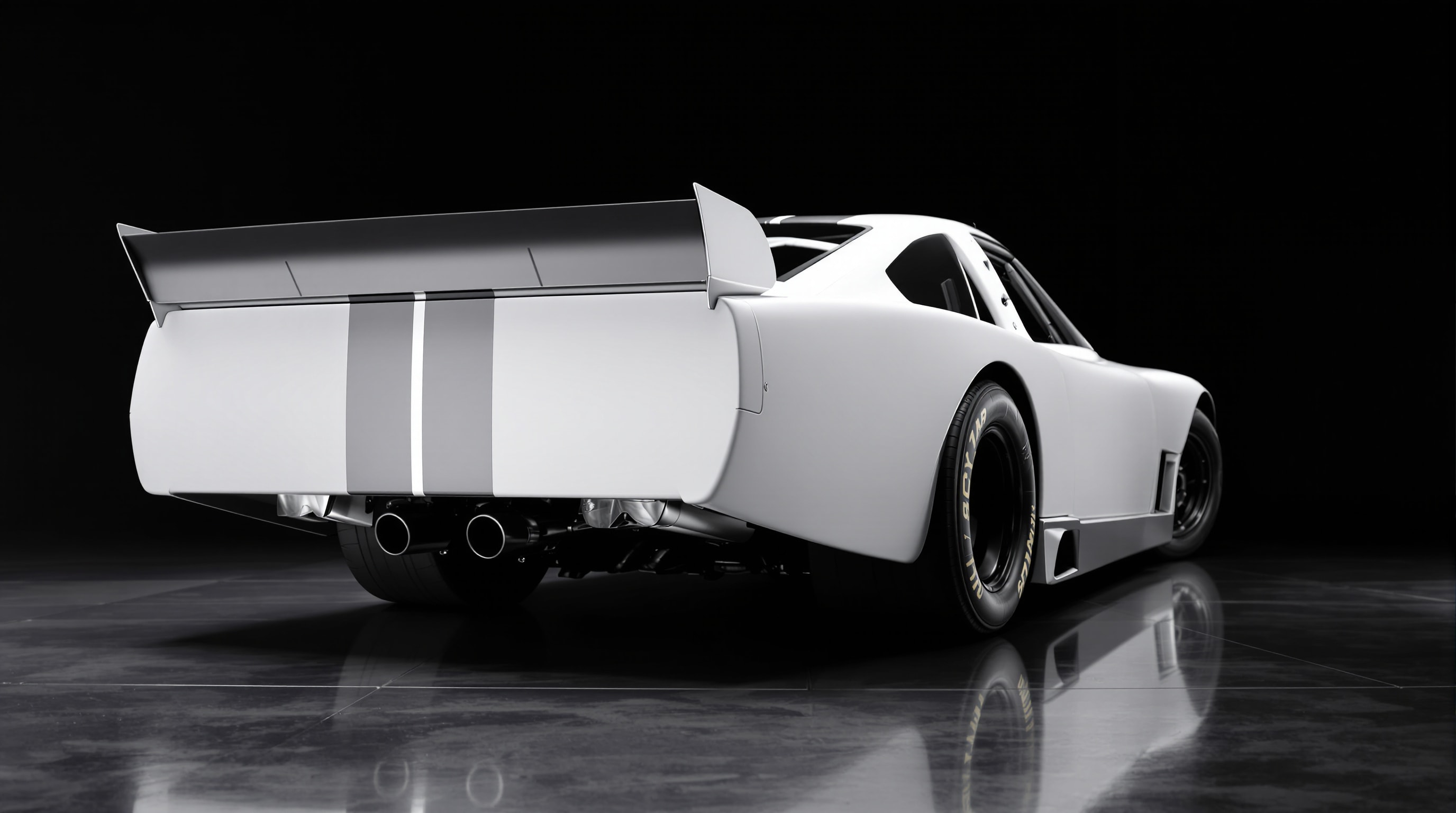
The No. 38
The No. 38 arrived as the team expanded to two full-time cars and became, for several consecutive seasons, its most stable programme — one entry, one driver, one crew, year after year. In an environment where most things change annually, that is unusual enough to be a strategy rather than an accident.
The value of not changing anything
Continuity compounds. A crew chief and driver working together across multiple seasons develop a shared vocabulary, which is a genuine engineering asset: when the driver says the car is doing something, the crew chief knows exactly what he means without a round of clarifying questions eating into a twenty-minute practice session.
The setup book compounds too. Second and third visits to a circuit with the same crew, the same driver and comparable equipment start from a real baseline rather than a guess. And the crew itself gets faster on pit road, because a pit crew is a rehearsed unit and rehearsal only accumulates if the same people keep turning up.
None of this is glamorous and all of it shows up as lap time. It is the strongest argument an independent team has against the resource advantage of a larger organisation: you cannot outspend them, but you can out-accumulate them if your people stay.
The 2007 car section
Like the other entries, the No. 38 had its own section on the 2007 site — landing page, driver, crew, news, results, show car and autographs, all foldered under the number. The car-foldered news stream from that period is the most complete week-by-week record the team left, with a separate release for each entry before and after every event.
Those individual release pages are not republished in this archive, for the reasons set out on the news archive page: they are single-event documents full of results, sponsor names and competitor names that belong to the official record rather than to a second-hand snapshot. The legacy URLs resolve to the news archive rather than dying.
Two cars, one shop
Running a second full-time entry is not twice the work — it is somewhere closer to one and three-quarter times, and the savings are all in the shop. The fabrication bay, the setup plate, the transporter and the spares inventory are shared. What genuinely doubles is the road crew and the number of prepared cars in the fleet.
The real benefit is information. Two cars at the same circuit on the same day means two setup directions can be tried in the same practice session, and the team learns twice as fast. That is the same logic that makes a manufacturer or a top-level organisation want a second-tier partner in the first place, applied one level down.
The trade-off is that a two-car team has to decide, sometimes mid-race, which car it is racing for. Independents mostly avoided formalising that and dealt with it case by case, which is diplomatic rather than efficient but keeps two drivers reasonably happy.
Elsewhere
See the drivers roster, the shop and crew, and the other entries: the No. 32 and the No. 10.