Multimedia
The original multimedia section made a simple promise: "We will attempt to maintain our photo gallery with new photo albums after each event." It kept it. Behind the section sat several hundred album pages, foldered by year, by round number, by circuit and by car number, plus a wallpaper collection described as being "for the true fans".
How the archive was organised
The folder structure is a fossil of how the team worked. Albums were filed by season, then by an index number giving the round, then by circuit and car — so a single folder name encoded the year, where in the season it fell, which circuit it was and which entry it followed. Inside each sat full-size images and a matching set of thumbnails, with a small index page listing them.
Individual frames carried the photographer's own filename convention rather than a descriptive one, which is normal for working motorsport photography and mildly infuriating for anyone cataloguing it afterwards.
What the photographs were of
Team photography of this kind is not the same thing as the wire-service images that reach the public. A wire photographer is shooting the race for a news audience. A team photographer is shooting a documentation and marketing asset, and the brief is different:
- The car looking good. Livery clearly readable, ideally in clean air, ideally in decent light. These are the images that go to sponsors.
- Pit stops. Both as marketing material and, genuinely, as review footage — a stop photographed from a fixed position is a stop the crew can analyse.
- The garage. The work behind the result. This is the material that dates best and is the most historically useful now.
- Hospitality and guests. Unglamorous and commercially essential; a sponsor's guest photographed beside the car is a renewal argument.
- The circuit itself. Grid shots, atmosphere, the crowd.
The technical side
This archive spans the period in which motorsport photography went fully digital. Early albums are small, heavily compressed and clearly working from a limited frame budget. Later ones are larger and far more numerous, because the marginal cost of a frame had dropped to nothing and shooters were suddenly bringing back thousands of images from a weekend rather than hundreds.
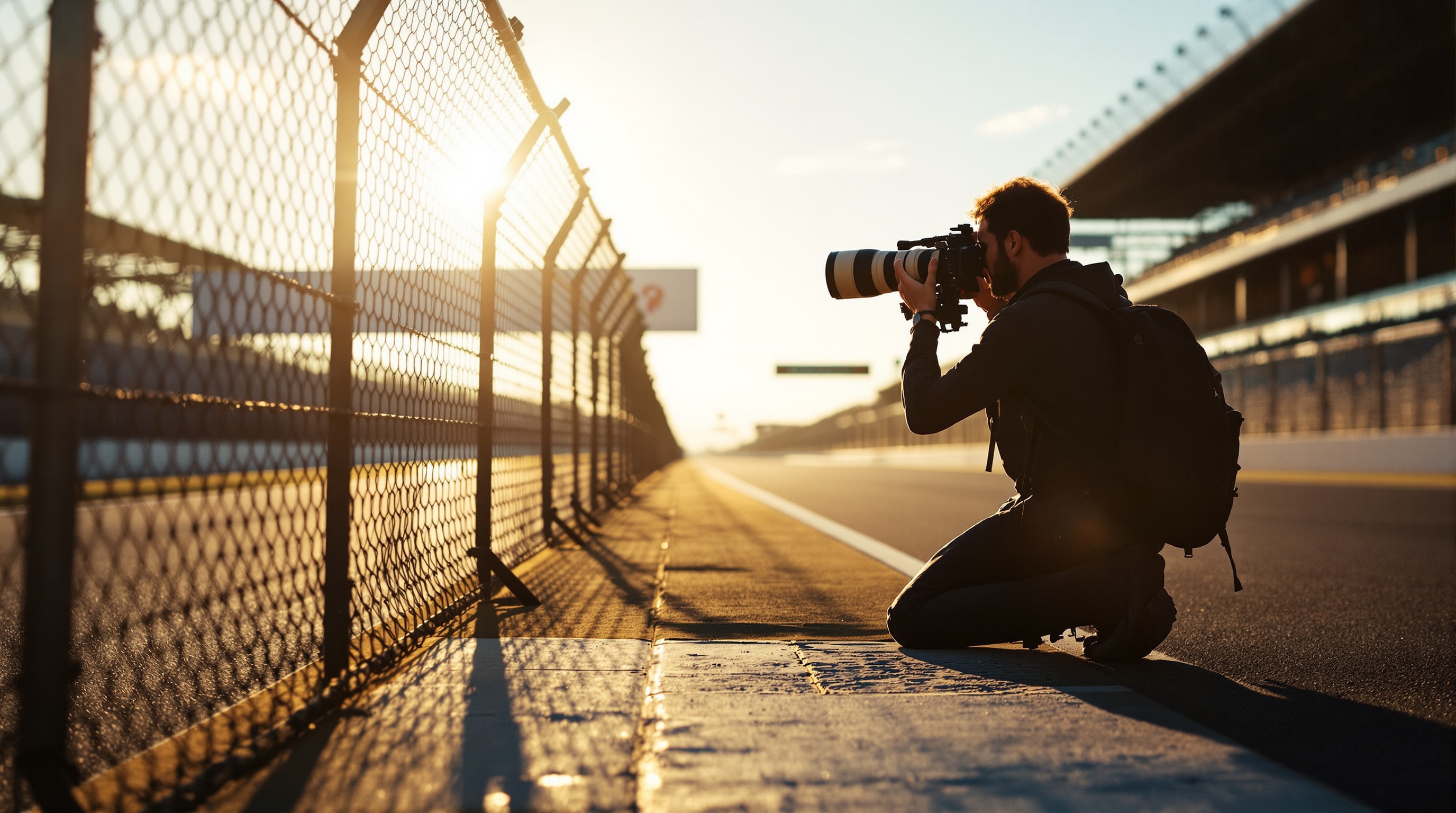
The craft did not change as much as the volume. Panning at slow shutter speeds to keep a moving car sharp against a blurred background, working around catch fencing, dealing with the brutal contrast of an infield in mid-afternoon, and the hard fact that the good light arrives in the last hour of the day whether or not anything is happening on track.
Wallpaper
The wallpaper page is a genuine period artefact. A team site in this era was expected to supply desktop backgrounds at a range of screen resolutions, and the sizes offered — the standard monitor dimensions of the mid-2000s — date the collection precisely. It was a small, cheap, effective piece of fan engagement from the years before social platforms took that role over entirely.
What is preserved here
The original photographs are not reproduced. They were made by working photographers who hold the rights to them, they show identifiable people, and many are dense with third-party marks on the cars and around the circuit. Republishing them from an archive snapshot would not be honest.
What is preserved is the structure and the account of how it worked, plus a set of new images made for this archive. The legacy album index URLs resolve here rather than dying, so long-standing links from fan sites and forums still land somewhere useful. Direct links to individual image files are deliberately left dead — an image URL should return an image or nothing, and quietly redirecting one to a page of text is a small dishonesty that adds up.
Anyone researching the visual record of this period seriously should start with institutional collections rather than team archives; the Smithsonian Libraries digital collections are a reasonable first stop for American motorsport material.