Inside the Shop
A stock car team is not a pit crew with a building attached. It is a small manufacturing business that happens to ship its product to a different state every weekend. Most of the work happens on weekdays, in a building, by people the television audience never sees.
The two halves
Every team of this size divides in two. There is the shop crew, who build and repair cars, and the road crew, who take them racing. The two overlap heavily — most of the people who go to the track spent Monday to Wednesday building the thing they are now working on — but the distinction matters, because it is the reason a team's headcount is always larger than the number of people you can see at the circuit.
Fabrication
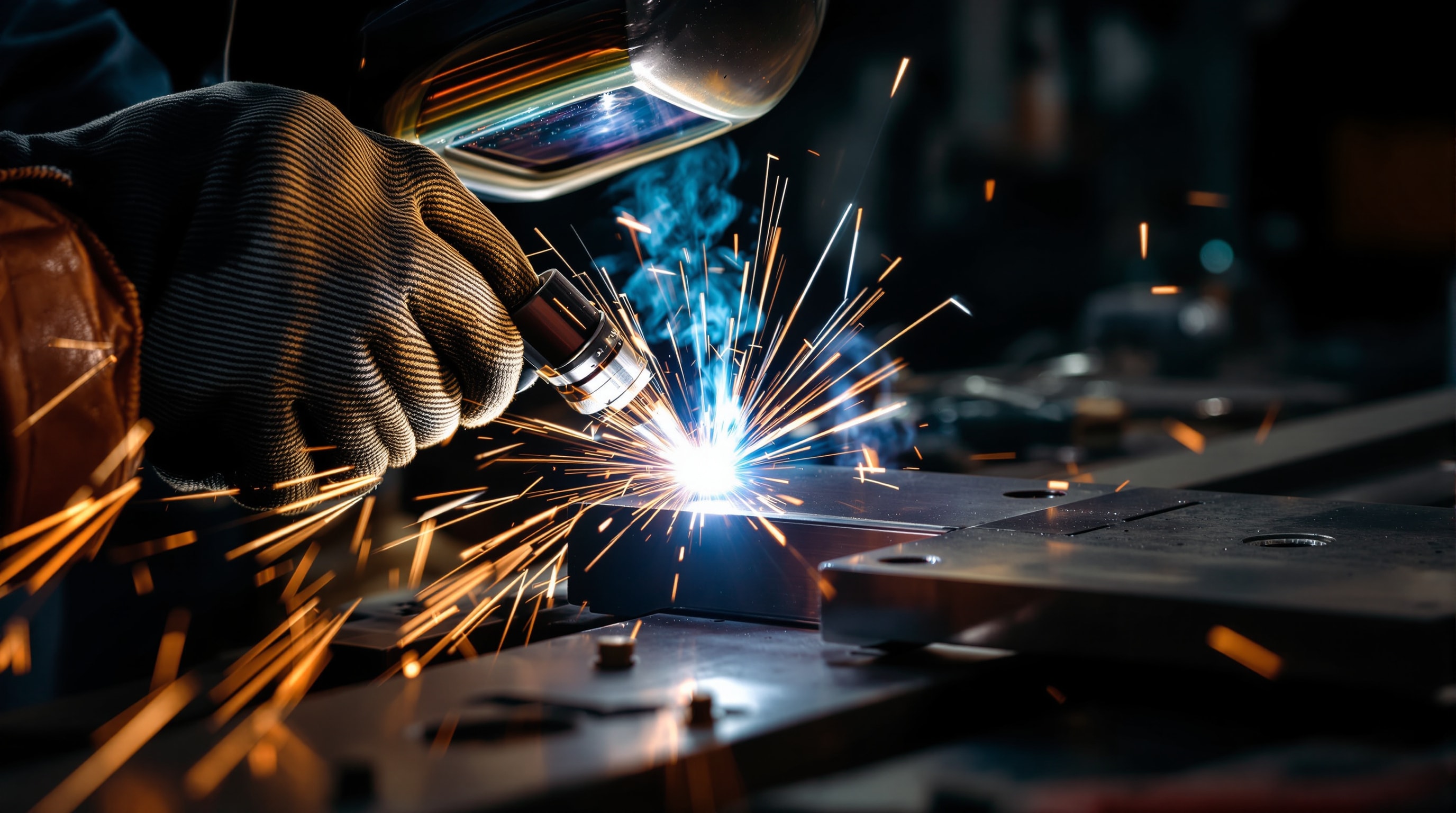
Fabrication is where a car becomes a car. A tube frame arrives or is built on a jig; from there the sheet metal is formed, trimmed and welded, floors and firewalls go in, mounting points are located, and the body is hung and shaped. It is slow, physical, precise work, and it is the part of the operation that most determines whether a team is any good — because everything downstream, every setup decision the crew chief will make for the next two years, is made on top of the geometry that gets fixed here.
The skills are conventional metalworking skills applied to unusually tight tolerances: TIG welding on thin-wall chrome-moly, English wheel and shrinker-stretcher work on panels, jig-and-fixture discipline so that the second car is the same as the first. Material specification is not casual either — tubing, sheet and fastener standards used across the industry trace back to published specifications from bodies like ASTM International and SAE International, and a team that substitutes something cheaper finds out at an inconvenient moment.
The setup plate
Once a car exists it lives, between races, on a level plate. This is where corner weights are set, ride heights and rake are dialled in, springs and bars are fitted, bump steer is checked and the geometry is measured over and over.
Setup is the team's real intellectual property. Two cars from the same builder, with the same engine, will be seconds apart over a run because of decisions made here. The variables are simple to list and brutally interdependent: spring rates at each corner, damper valving, anti-roll bar sizes, ride heights, camber and caster, weight distribution front to rear and left to right, tyre pressures, track bar height. Change one and you have changed the behaviour of the others.
Teams keep this in a book. Every car, every track, every session — what was on it, what the driver said, what the stopwatch said. That book, accumulated over seasons, is why an established team starts a weekend closer to the answer than a new one does. It is also why a crew chief leaving is a genuine loss and not just a personnel change.
The turn-round
When the transporter returns, the next race begins before the previous car is fully unloaded. The first job is not modification but inspection: fluids are checked, fasteners and witness marks are reviewed, clearances are measured again, and anything that moved or wore unexpectedly is written onto a work card. Dirt and rubber have to come off before a hairline crack, a bent bracket or a chafed line can be seen. A car that finished cleanly may still need more careful attention than one with obvious body damage.
Only then does the next-track setup go on. Components are cleaned, measured and either returned to service or set aside; springs, dampers, gearing and brake packages are chosen for the circuit ahead; and the bodywork is checked against its templates. The important discipline is sequence. If several people make changes without one record tying them together, the setup plate no longer describes the same car that the notes book describes.
That turn-round is where an independent team’s small headcount is felt most sharply. The same mechanic may be repairing one chassis, preparing another and packing the spares that support both. Good shop organisation does not make the week less busy. It prevents busy work from becoming uncertainty at the track.
Engines and drivetrain
Almost no second-tier team builds its own engines. They are leased or bought from a specialist builder, arrive sealed, are fitted, run, and go back. What the team controls is gearing, cooling, and how the engine is treated — which is not nothing, since the difference between an engine that lasts a season and one that does not is largely a matter of how carefully it is warmed, geared and monitored.
The gearbox and rear end are the team's own problem. Ratios are chosen per track, and the calculation is unglamorous arithmetic: circuit length, expected average speed, the rev limit, and how much time is spent at full throttle. Get it wrong and the car is either bouncing off the limiter down the straight or falling off the corner exit.
The road crew
On a race weekend the same people take on second jobs. The original team pages listed each member of the travel crew with two roles — a shop or mechanical discipline, and a pit-stop position — because that is how the job actually works. A representative set of the pit assignments looked like this:
- Gas man — carries and dumps the fuel can over the wall. Physically the hardest job on a stop; a full can is heavy and awkward and it has to be placed accurately, first time, in about a second.
- Second can / fuel runner — brings the second can out and manages the fuel supply behind the wall.
- Catch can — handles vent overflow at the rear of the car and, in most teams, is also the person who signals that fuelling is complete.
- Tyre changers and carriers — the front and rear of the car, working to a rhythm that is rehearsed in the shop all week.
- Jack man — sets the pace of the whole stop; the car does not move until he drops it.
- Car chief — the crew chief's deputy, responsible for the physical car and for making sure the adjustments the crew chief calls for actually get made correctly.
- Shock specialist — dampers are the most sensitive adjustment on the car and usually get a dedicated person.
- Fuel mileage and notes — someone whose entire race is a stopwatch, a lap chart and an arithmetic problem about how far the car can go. Strategy calls are made from this seat.
- Truck drivers — the transporter is driven to the track by team members, usually two of them, who are also mechanics when they arrive.
Nine or ten people, most of whom also built the car. That doubling is the defining feature of an independent operation and the reason its people are more versatile than their counterparts at larger organisations.
The pit box
During the race, the decision-making sits in the pit box: the crew chief, the spotter on the roof, the engineer or notes man, and the driver. The spotter has the only complete picture — he can see the whole circuit and the traffic the driver cannot — and his job is short, calm, unambiguous sentences. The crew chief has the only complete picture of the car and the fuel. Between them they decide when to stop, what to change and whether to gamble.
Noise, heat and the rest of it
The working environment is genuinely hazardous and the industry has taken it steadily more seriously over the decades. Sustained noise exposure, heat stress in a suit in an infield in August, fuel handling, and fatigue across a ten-month travelling schedule are all real occupational issues, and safety equipment standards — helmets in particular, certified by independent non-profits such as the Snell Memorial Foundation — exist because people were hurt before they did.